Collapsing fragmented procurement into one continuous workspace.
The enterprise B2B quote-to-checkout journey was scattered across multi-step pages and dependencies. I redesigned it as a single self-serve workspace that procurement teams could navigate confidently.
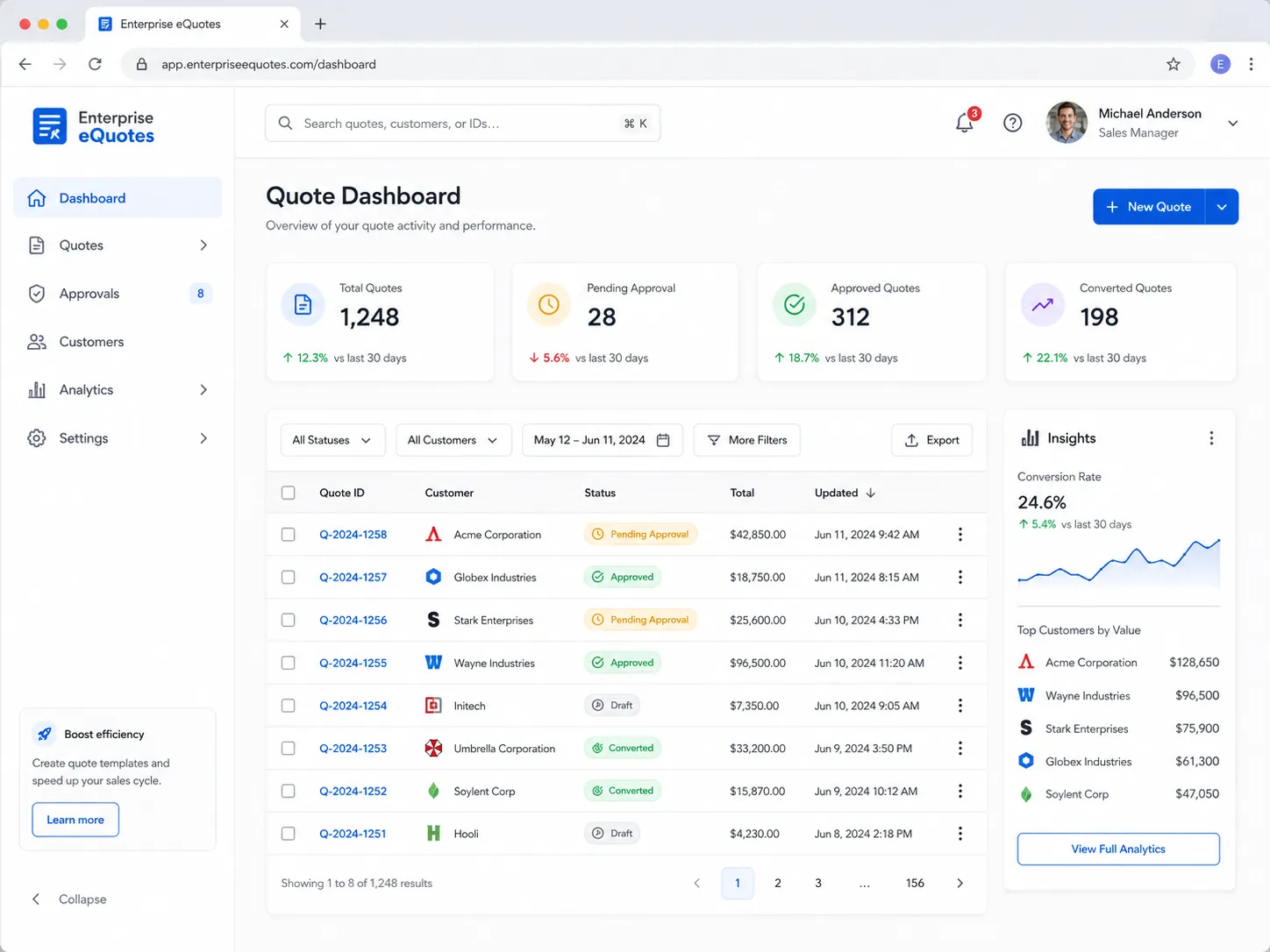
Problem statement
The enterprise eQuote experience had grown organically over years. Procurement teams configuring large hardware orders were forced through fragmented multi-step pages, modal-heavy approval flows, and brittle external dependencies - quotes regularly stalled while waiting on sales-rep intervention or external pricing systems.
Support tickets and user research consistently surfaced the same pattern: buyers wanted to self-serve, but the interface didn't let them. The fragmented journey forced repeated context-switching, eroded buyer confidence, and pushed deals into manual escalation paths.
Hypothesis
The existing system showed everything at once because stakeholders feared hiding any feature. Research revealed the opposite need - buyers wanted information at the moment they could act on it, not before.
“If we redesign the quote experience as a single continuous workspace with progressive disclosure of supporting context, buyers will complete enterprise procurement self-serve - reducing drop-offs and eliminating reliance on sales-rep escalation.”
Research & analysis
We approached the problem from multiple angles to understand both the surface friction and the structural fragmentation underneath.
- 01Procurement-team interviewsDirect conversations with enterprise buyers across multiple sectors - surfacing decision-points, abandonment moments, and trust signals.
- 02Support-ticket pattern analysisIdentifying high-frequency friction points where users escalated to sales reps for tasks they should have been able to self-serve.
- 03End-to-end workflow mappingTracing the buyer journey across every modal, page, and external dependency to identify breaks in continuity.
- 04Sales-rep shadowingObserving how reps manually filled the experience gaps - and codifying those interventions into the new self-serve design.
Design process & solutions
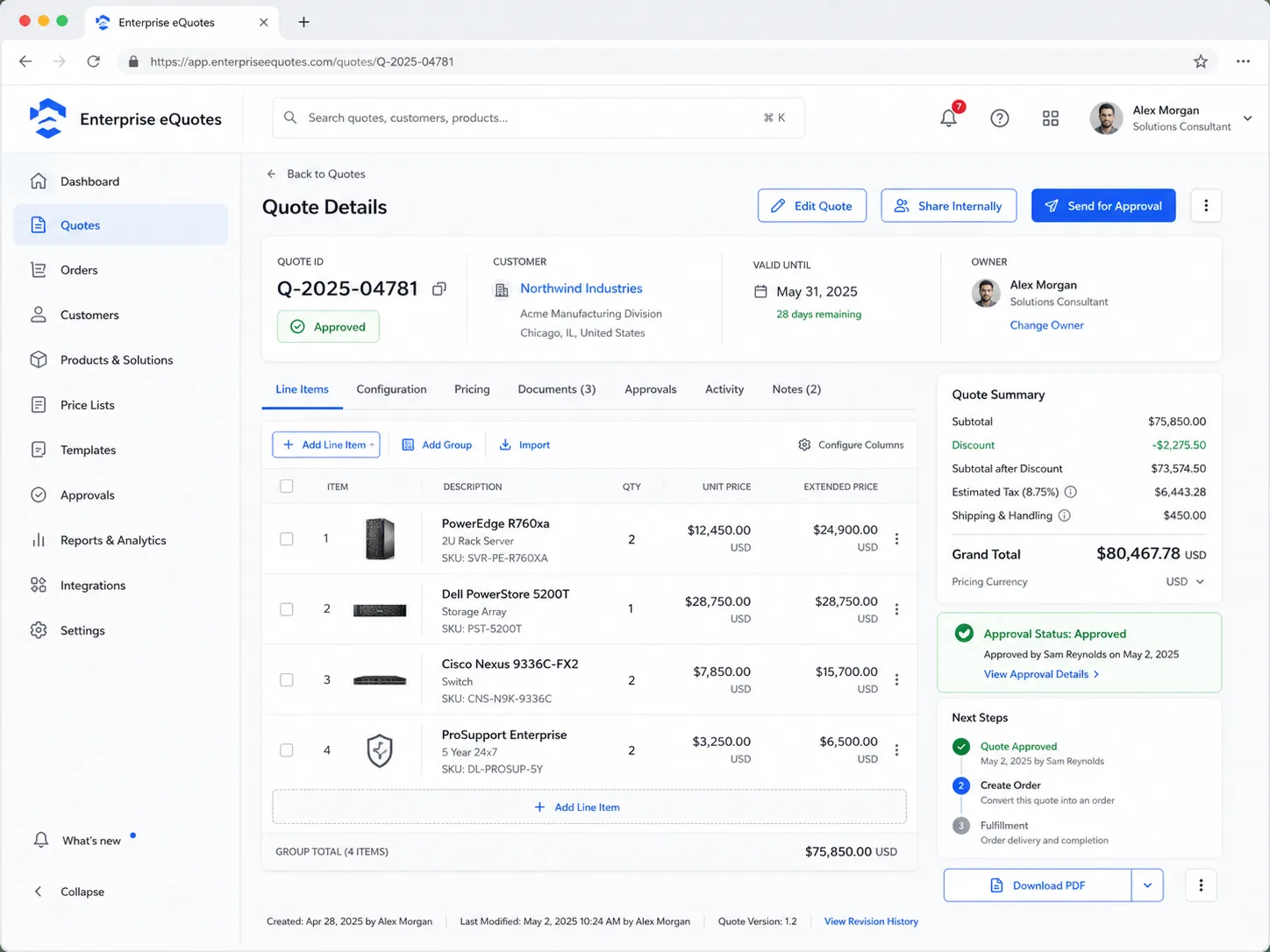
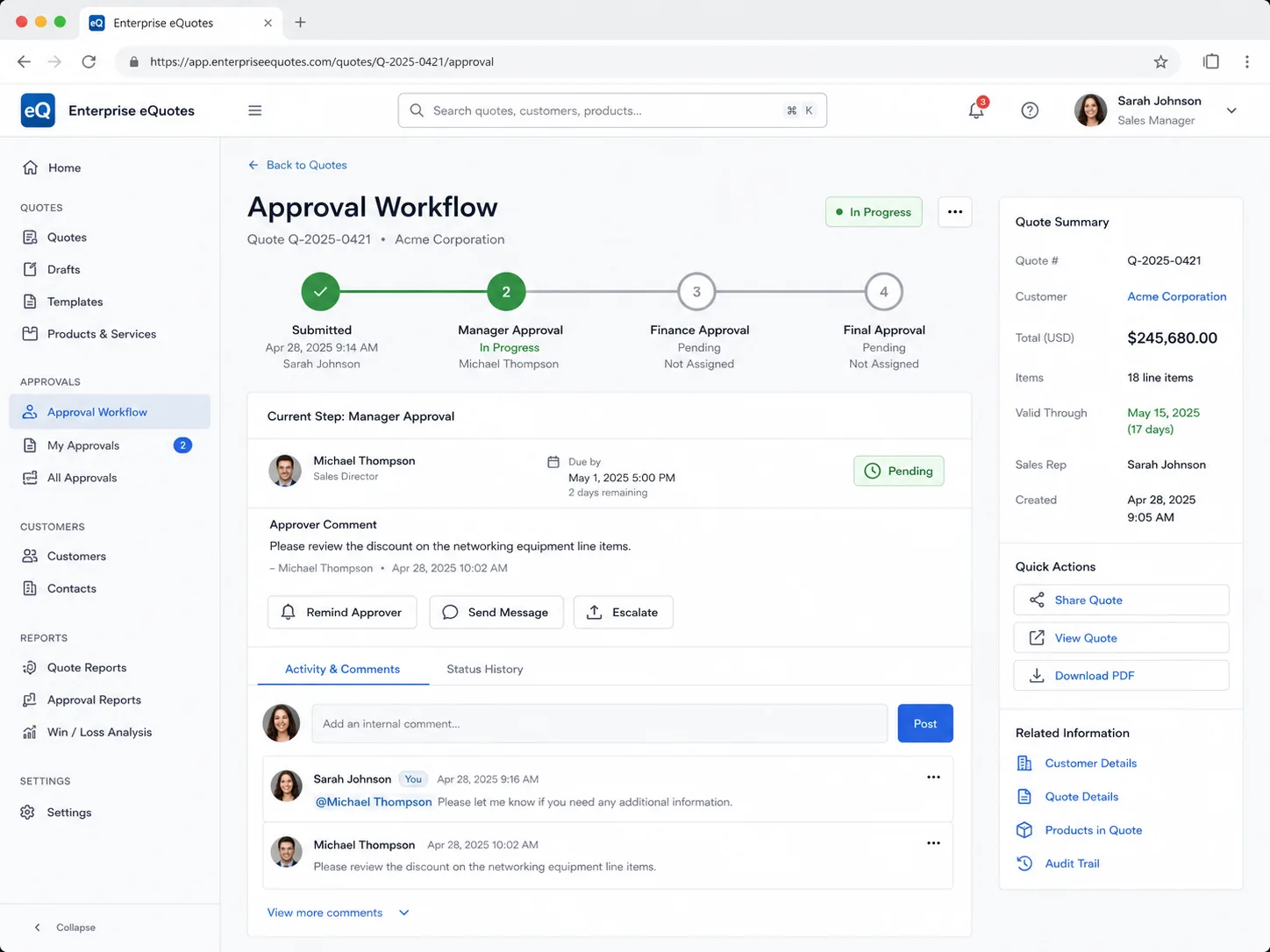
The redesign collapses the previously-fragmented multi-page journey into one continuous workspace, with progressive disclosure pulling supporting context (pricing details, configuration explanations, approval status) into the moment of decision rather than ahead of it.
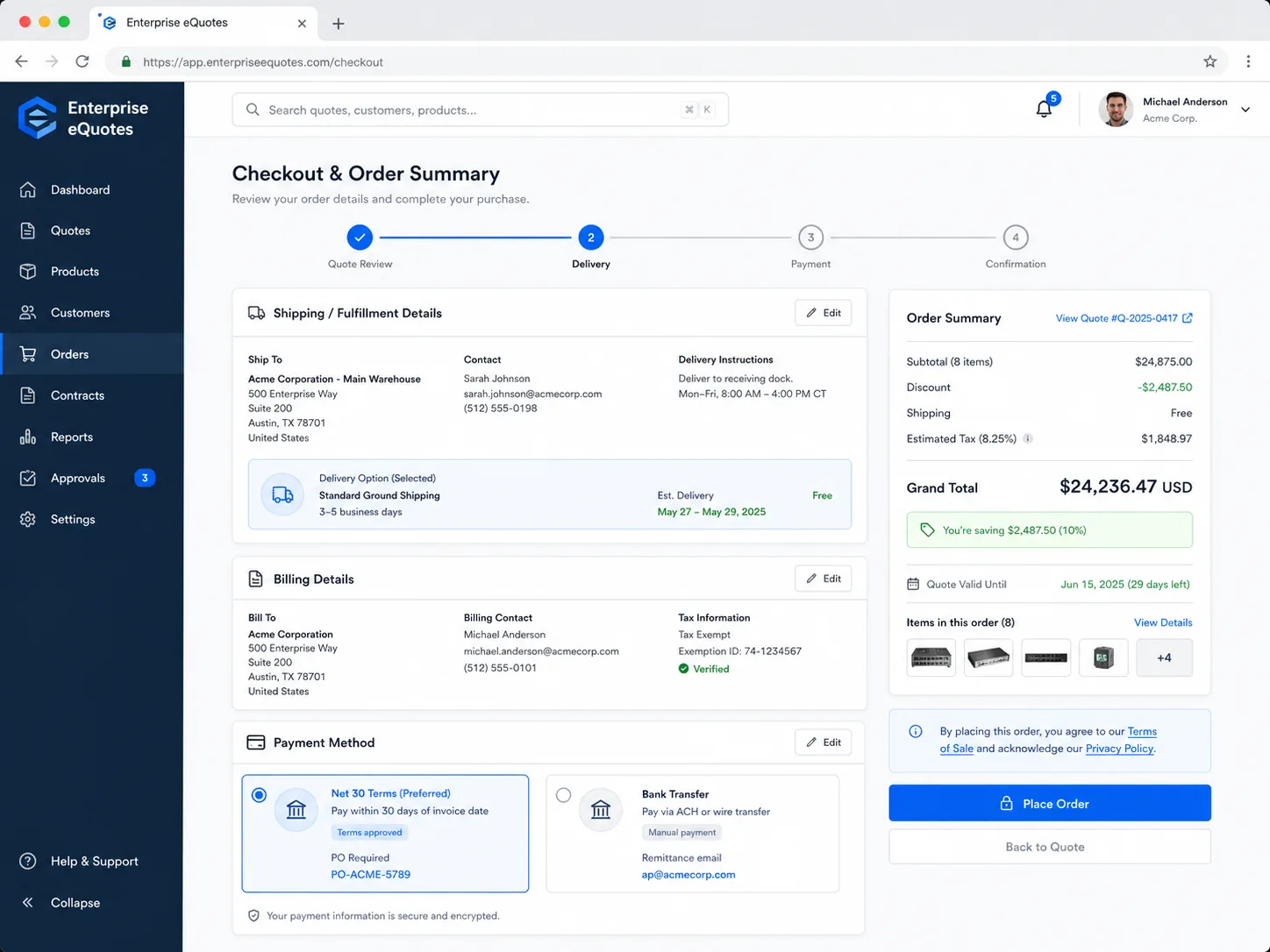
- 01Unified configuration workspaceOne persistent canvas. Buyers add, configure, and review without losing the bigger picture or being forced into modal dialogs.
- 02Progressive disclosureSupporting details - bulk pricing tiers, configuration explanations, alternate options - surface contextually rather than crowding the primary view.
- 03Inline approval indicatorsMulti-stakeholder approval status displayed inline at the relevant line item - no more chasing emails or separate dashboards.
- 04Self-serve guidance patternsCodified the help that sales reps were manually providing - built it into the interface so buyers no longer needed an escalation path.
- 05Persistent quote stateThe workspace maintains state across sessions. Buyers leave and return without restarting - a critical fix for multi-day enterprise procurement cycles.
Outcomes & impact
Reflections
B2B enterprise UX often defaults to showing every option upfront - out of a misplaced fear that hiding anything will look incomplete. This project reinforced the opposite: continuity beats completeness.
- 01Map the manual work firstThe best self-serve interfaces are the ones that codify exactly what humans were doing manually - sales reps had already discovered the right answers, they just weren't in the UI yet.
- 02Progressive disclosure isn't hidingIt's timing. Surface the right detail at the moment it can be acted on, not before. Buyers don't want less information - they want it at the right moment.
- 03Persistent state is non-negotiable for enterpriseProcurement cycles span days and stakeholders. A workspace that doesn't remember where the buyer left off is a workspace that gets abandoned.