Making AED readiness visible, actionable, and easier to manage.
A high-stakes administration experience for HeartSafe, helping teams oversee Automated External Defibrillator readiness, inspections, sites, users, and role-based access from one connected platform.
The operational challenge
An Automated External Defibrillator can be installed and still be unavailable when it is needed. Battery condition, pad expiry, connectivity, self-test results, inspection history, and location details all affect whether a device is truly rescue ready.
The experience needed to help administrators understand device state quickly, identify what required attention, and move from organisation-level oversight into a specific record without losing context.
“Make readiness visible before asking people to investigate, then keep the next action close to the evidence.”
Platform architecture
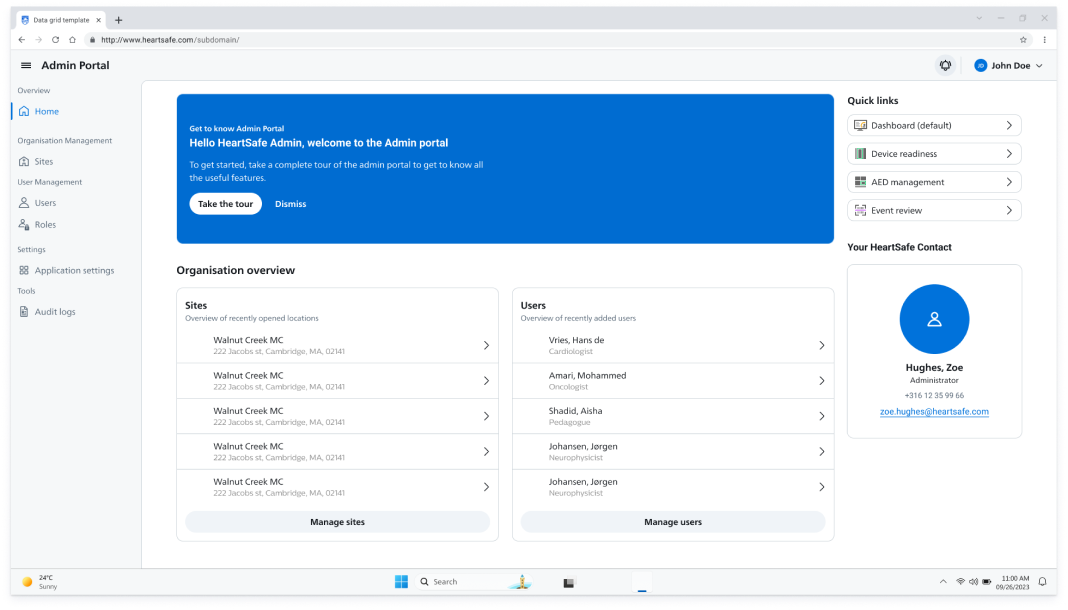
The admin portal organises the wider HeartSafe ecosystem into understandable areas: organisation management, user management, application settings, audit tools, device readiness, AED management, and event review.
Readiness at a glance
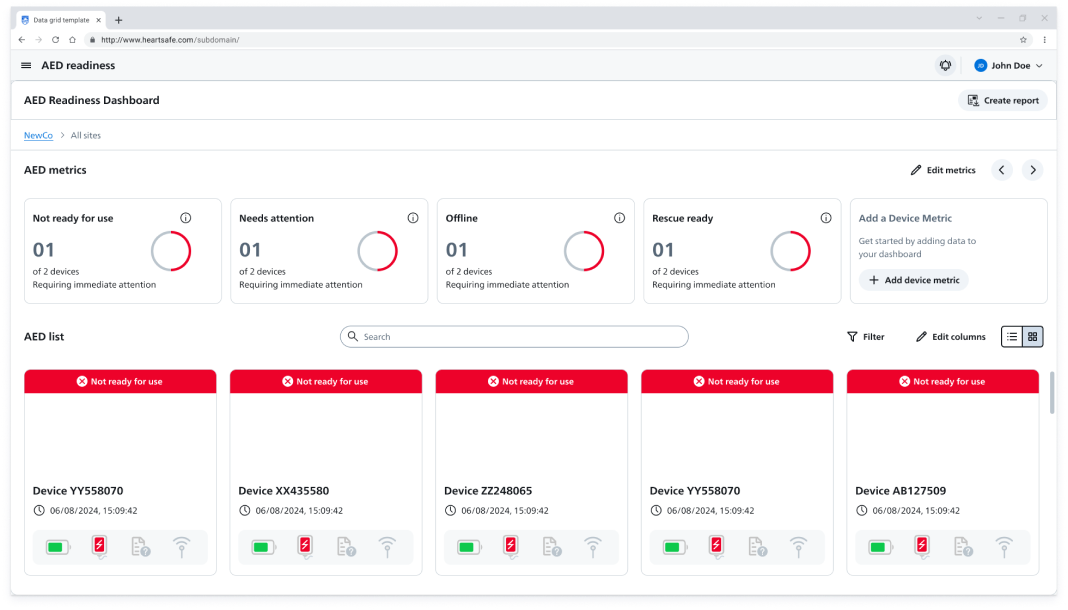
The dashboard separates device states into clear operational categories such as not ready for use, needs attention, offline, and rescue ready. Summary metrics, search, filters, and flexible list or card views support both rapid scanning and deeper investigation.
Device records & inspection workflows
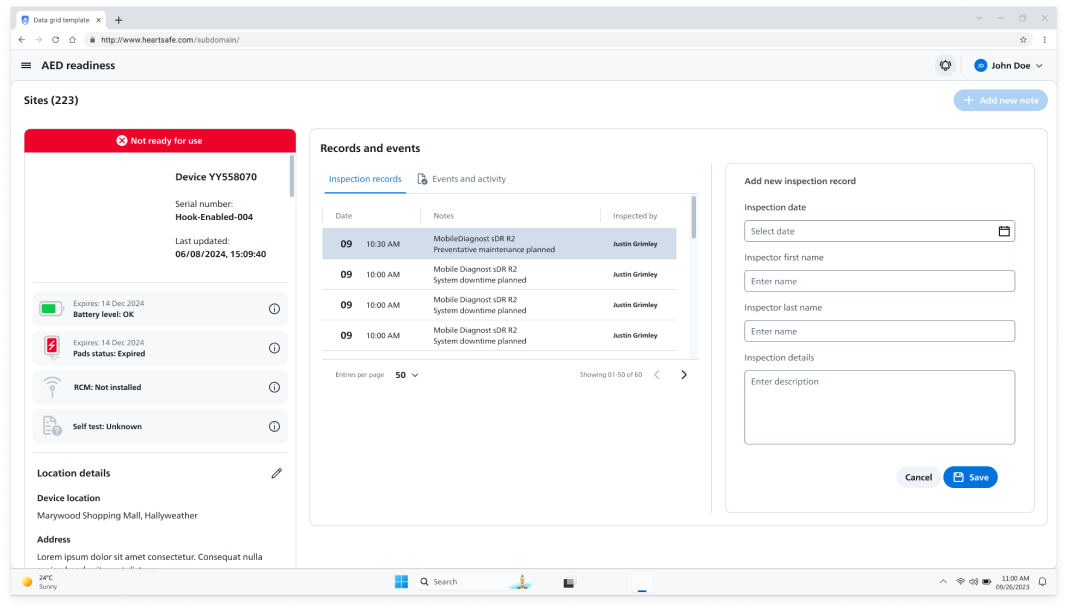
The device detail experience brings readiness status, battery and pad condition, connectivity, self-test information, location details, inspection records, event activity, and the new inspection form into one working area.
Sites & AED operations
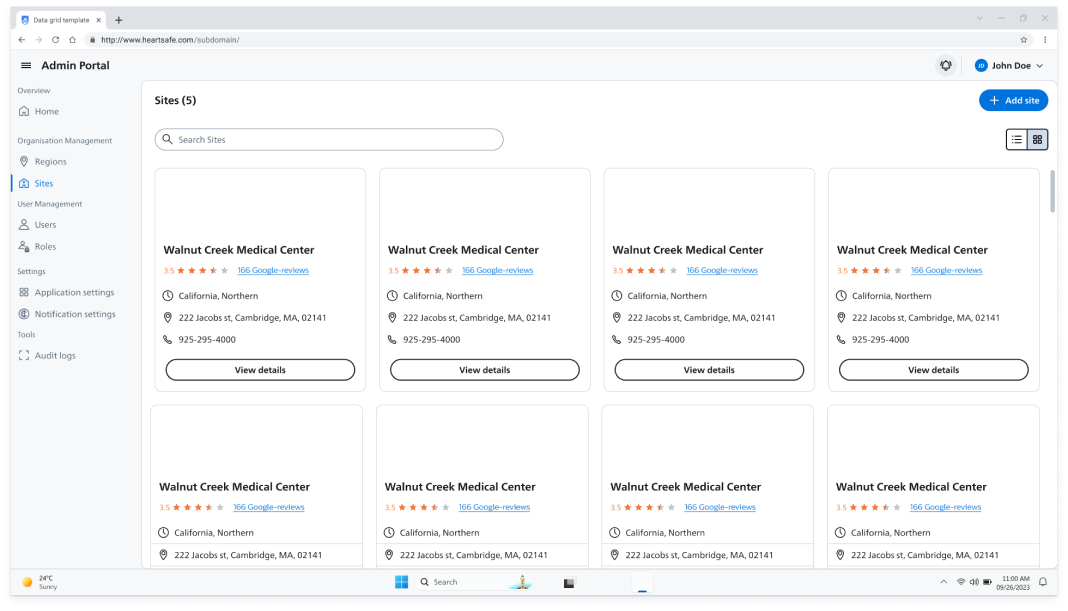
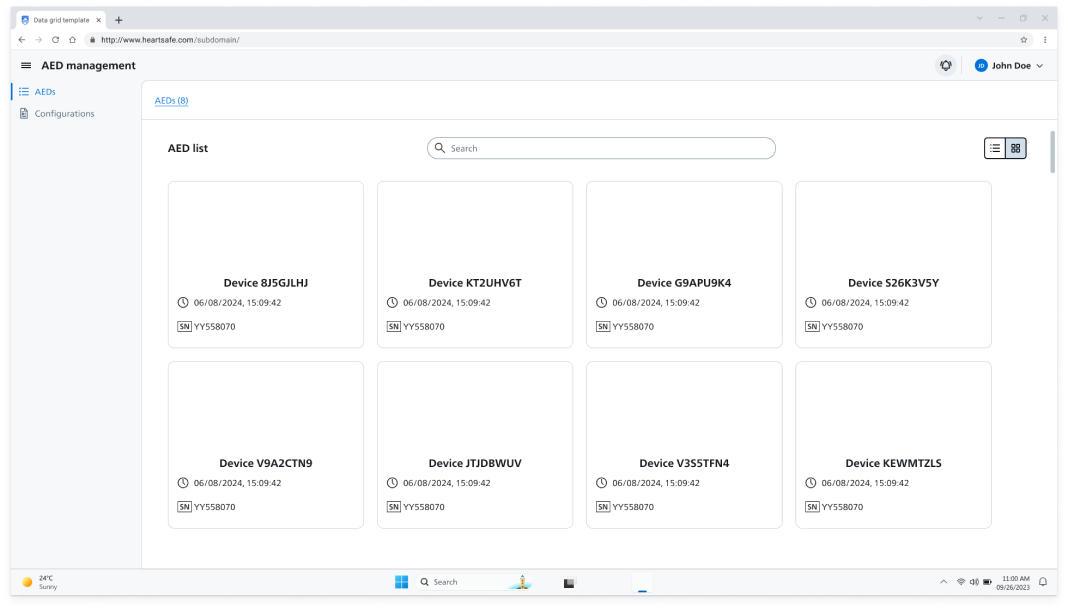
Site and AED management use consistent search, card, and view patterns so administrators can move between location-level oversight and device inventories without relearning the interface.
Roles & access management
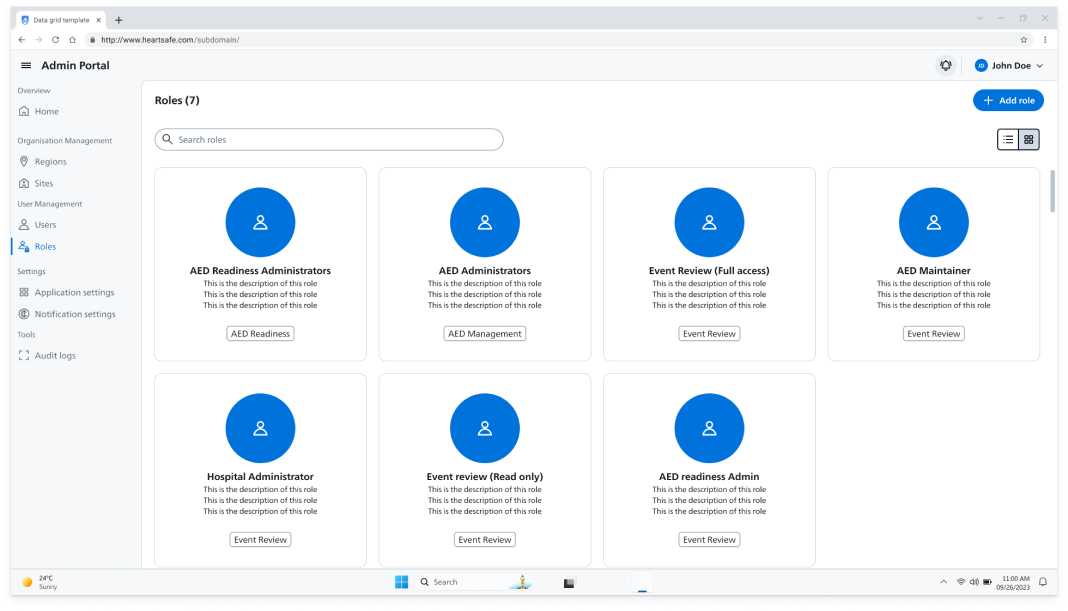
Role cards make the available responsibility areas explicit, including readiness administration, AED administration, event review, maintenance, and hospital administration. The structure gives administrators a clearer foundation for assigning access by operational need.
Design reflection
High-stakes products do not need to feel alarming everywhere. They need a calm structure that makes urgency unmistakable when it appears. The HeartSafe experience uses repeated interaction patterns, clear device states, and contextual records to support confident administration without turning every screen into an emergency.
- 01Readiness before detailSurface the operational state first, then provide the evidence and actions behind it.
- 02Consistency reduces frictionSearch, cards, lists, and management patterns repeat across sites, devices, and roles.
- 03History belongs beside actionInspection and event records are most useful when the next maintenance action is available in the same context.